
As we have learned in class and through our textbook, the microbiome is an important part of human health and functions in many different ways. From what we have learned in class, the microbiome consists of the community of microorganisms as well as their genetic information in a given environment. We have learned that the microbiome is first started at birth, through the passage of the fetus through the vaginal canal. This is an important part of birth because it safely introduces microorganisms into the microbiome of the fetus. If this does not occur, such as in the case of a cesarean birth (C-section), the baby will have an underdeveloped microbiome and will be more susceptible to bad microorganisms than is the baby who had a natural birth.
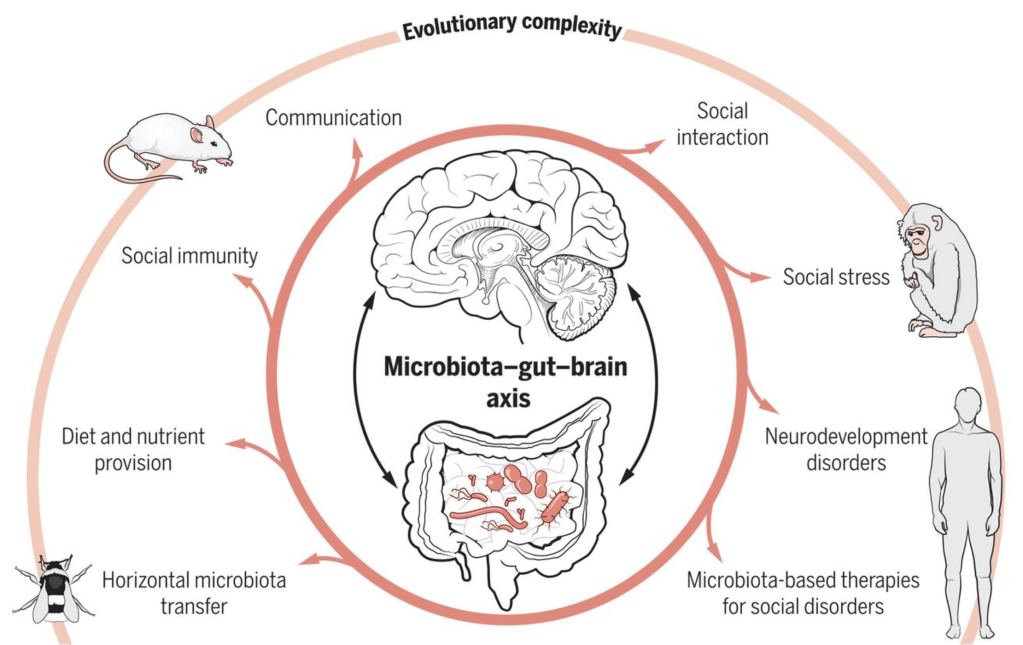
Ultimately, being introduced to microorganisms at a young age can be a good thing, as it can help start the normal microbiome of a child, which may not develop fully until the child is three years old. According to the Hygiene Hypothesis, without being introduced to good and bad bacteria at a young age, a child can become more susceptible to disease and allergies later on in life. According to Dr.Cramer , microbiologists years ago did not have any idea that the microbiome was as important as we know it is now. This coincides with the number of recent studies into the role of the microbiome in human health.
One article claims that the state of the microbiome can play a role in inflammatory disorders, metabolic syndrome, obesity, and behavioral dysregulation. The study specifically looked at how changing the diets of mice drastically can change the makeup of the microbiota of the gut, and how this can lead to many other health issues. They found that all of the mice, in every single case, had a drastic loss in the variety of the microbiota, and some of those where the “good” microbiota of the gut. Without these microbes, the mice experienced slower metabolic rates, which overtime had detrimental effects.
Another article claims that the microbiota is so important to health, that it can even affect circadian rhythms. In one experiment, “mice lacking their intestinal microbiota lose the rhythmic fat uptake that cycle diurnally in mice with their microbiomes intact”. The article also claims that microbes in the gut direct the activity of an enzyme called HDAC3, that can influence genes that are important for metabolism. Ultimately this enzyme is produced rhythmically, and mice without it, had varying circadian rhythms. However, the article concludes that there are still a lot of missing pieces from the full story of how the process works.
I feel as though this speaks to the state of science as it relates to the microbiome today. We understand and can make the connection between a good microbiome and positive health; however, we still don’t know about a lot of the mechanisms by which the microbiome is doing these processes. We just take probiotics and hope for the best. In reality, both articles I chose discuss this week did experiments of mice. We will never truly know about the microbiome of humans, if we can only experiment on mice, it’s almost impossible to know fully how our microbiome works without testing moral limits. It’s very unfortunate that we have this issue because the microbiome is such a large part of our health, but we cannot study it fully.
I think if we could solve the some of the unknowns about the microbiome, especially the gut microbiota we could solve many health problems, such as metabolic disorders and diabetes. Personally, diabetes and obesity run in my family, and I believe that could have something to do with the gut microbiota, and how this effected by foods that we all eat. It’s very interesting to think about how little microbes can control a whole person’s health.

 Madison's Microbiology Masterpiece