
According to Cancer.gov Cancer is a group of diseases involving abnormal cell growth with the potential to invader or spread ro the surrounding tissues. Cancer can start almost anywhere in the body and can interrupt the normal process of cell death and regeneration. It can permanently damage tissues in the body, that can lead to death. There are many experimental treatments for cancer, some of which including cells already involved in protecting the body, called dendtric cells and T cells.
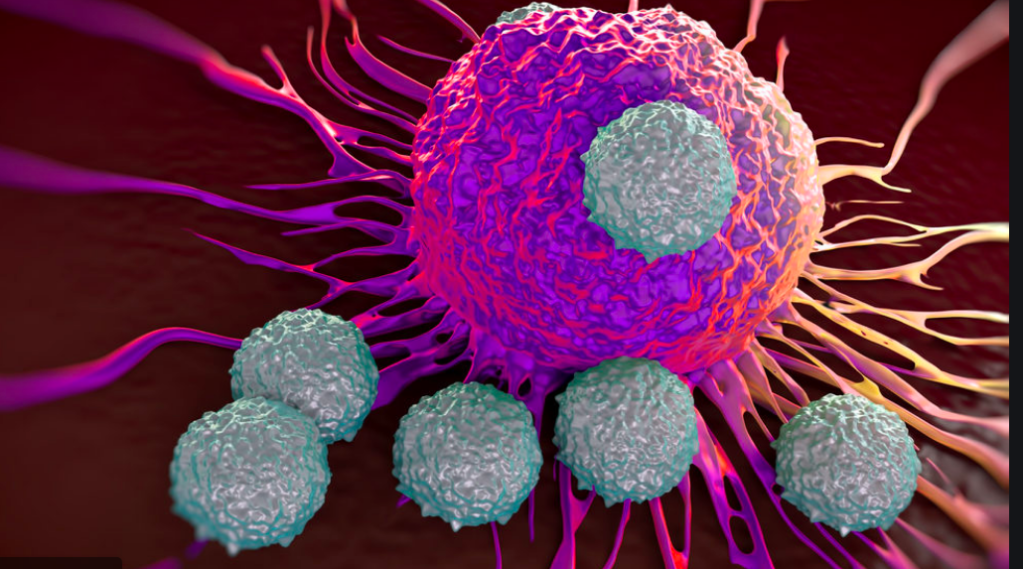
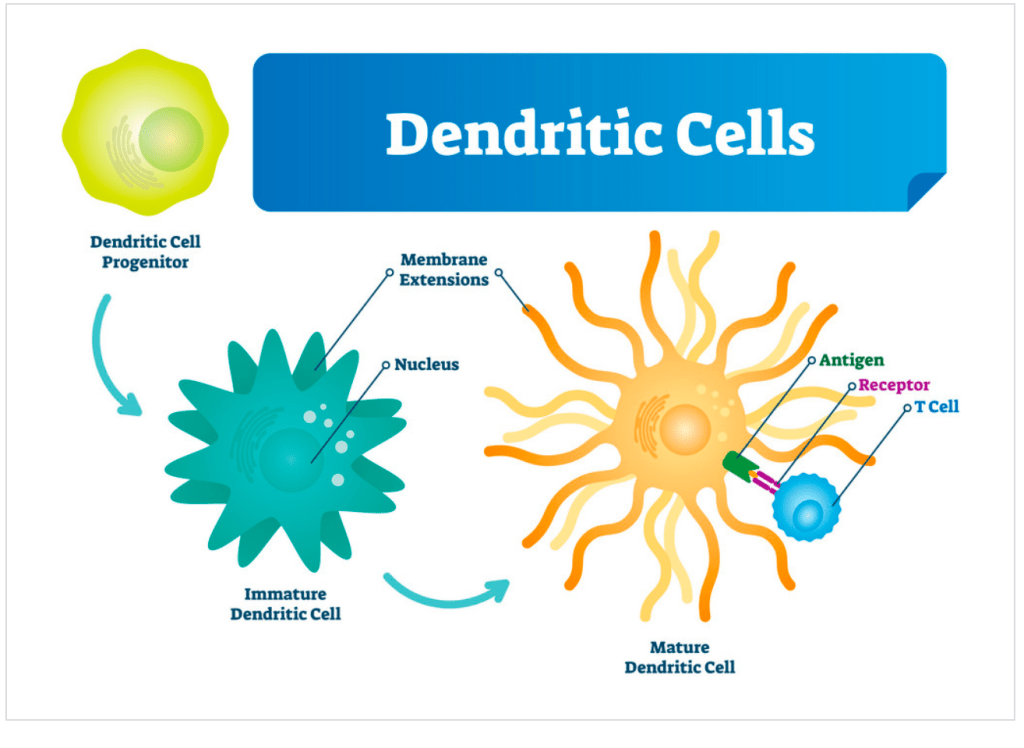
Dendritic Cells are immune cells that are able to activate both the innate and the adaptive immune systems. According to authors Saxena and Bhardwaj , DC’s play a vital role in tumor-immune surveillance. Usually, DC’s remain in an immature and inactivated state until exposed to the optimal stimuli such as inflammatory cytokines, microbial factors on endogenous alarmins. Once exposed, DC’s rapidly mature and process antigens to be presented to T cells on their MHC molecules.
Many have claimed the DC’s can play key roles in tumor immunity and have potential power for cancer immunotherapy. According to an article in nature.com DCs are specificially being studied because of their ability to uptake and present tumor-associated antigens (also called TAA’s) through a variety of mechanism. In layman’s terms, this mean that DC’s are cabable of helping treat cancer/tumor related diseases because of their ability to activate the immune system (especially T cells) against these tumor associated antigens. They also have the capacity to migrate between lymphoid and non-lymphoid tissues to module cytokine and chemokine gradients to control inflammation and lymphocyte homing, which the authors believe is very important for system and long-lasting anti-tumor effects.
Another way many scientists are looking to treat cancer is through Adoptive Cell Therapy. According to this article on ACT , T cells can also be used to help treat and prevent cancerous tumors. Adoptive cell therapy is a kind of cancer treatment that give T cells the ability to recognize cancer cell through specific gene engineering. ACT strengthens the ability of the innate immune response and exploits this efficiency in the treatment of cancerous diseases. Although effective responses have been observed through ACT, adverse effects have become an issue in many trials. Some patients exhibited severe destruction to normal tissues where malocytic cells were present in the skin, eye and inner ears. Some patients experienced severe inflammatory colitis, acute respiratory distress syndrome, cytokine release syndrome, and two people died of leukoencephalothapy.

A solution to this problem and many of the problems that come with the treatment of cancer through T-cell and DC’s is to use initiate personalized medicine. According to an article on NCBI, the adoption of ACT has steered the field of cancer treatment toward the concept of precision and personalized medicine (PPM), in which therapy is tailored to each individual. Over the past decade it has become increasingly clear that no cancers are exactly the same, therefore there needs to be variable responses to the treatment of cancers. Although this would be a great solution to increase the effectiveness of cancer treatment, therapies such as DC and T cell therapy can become very pricey because they are so tailored to each individual.
I feel like there is a lot of promise in the field of DC and T Cell research, however the cost really outweighs furthering the research. Once the therapies become fully developed, many people are not going to be able to afford custom treatment of their cancer and the tests it would take to determine their personal custom treatments, we can’t even afford universal healthcare for all. There is also a lot of confusion about the way the DC cells and T cells could help, and if it could work in everyone, because for a lot of the articles I read the therapy failed for many people. I don’t feel this would be the best to research because of the cost of the treatment as well as the high possibility of failure of the treatment.

 Madison's Microbiology Masterpiece